Your Somerset Business Probably Doesn't Need a Big Website
Here's a conversation we have constantly with business owners around Somerset and Pulaski County: they know their website is outdated, they've been quoted thousands for a big multi-page rebuild, and they've been putting it off for two years because the whole thing feels like a project.
Most of the time, our honest answer is: you don't need the big rebuild. You need one page that does its job.
Think about how a local customer actually reaches your site. Someone on Lake Cumberland needs a dock repaired. Someone new to town is looking for a chiropractor off Highway 27. Someone in a Pulaski County Facebook group got your name as a recommendation and tapped through to check you out. They are not settling in to browse your site. They're asking three questions — what do you do, can I trust you, how do I contact you — and they'll give you maybe fifteen seconds to answer.
A twenty-page brochure site scatters those answers across menus nobody opens. A well-built single page answers all three before the first scroll ends.
Why One Page Wins for Local Service Businesses
This isn't about cutting corners. For a business with one location and a handful of core services — which describes most of Somerset — a single page is genuinely the stronger tool:
- Nothing gets buried. No "Services" dropdown, no About page nobody visits. One scroll, one story, one phone number, repeated.
- It's faster. Less to load matters when half your visitors are on a phone, some of them on lake-area cell service.
- You control the order. Visitors see your proof and your offer in the sequence you chose, instead of wandering.
- It stays current. One page is easy to keep updated. Multi-page sites around here have a familiar failure mode: a blog last touched in 2022 and a services page listing something you stopped offering. Stale pages actively cost trust.
Big sites still make sense for some businesses — heavy e-commerce, or a company chasing rankings for many distinct services across many towns. If that's not you, simpler wins.
The Structure That Works, Top to Bottom
Every effective one-page local site we build follows roughly the same skeleton:
1. The header answers everything in one glance. Who you are, what you do, where you do it, and a button. "Plumbing repair and installation for Somerset and Lake Cumberland" beats a clever slogan every single time. Put the phone number in the top corner — on mobile, make it tap-to-call.
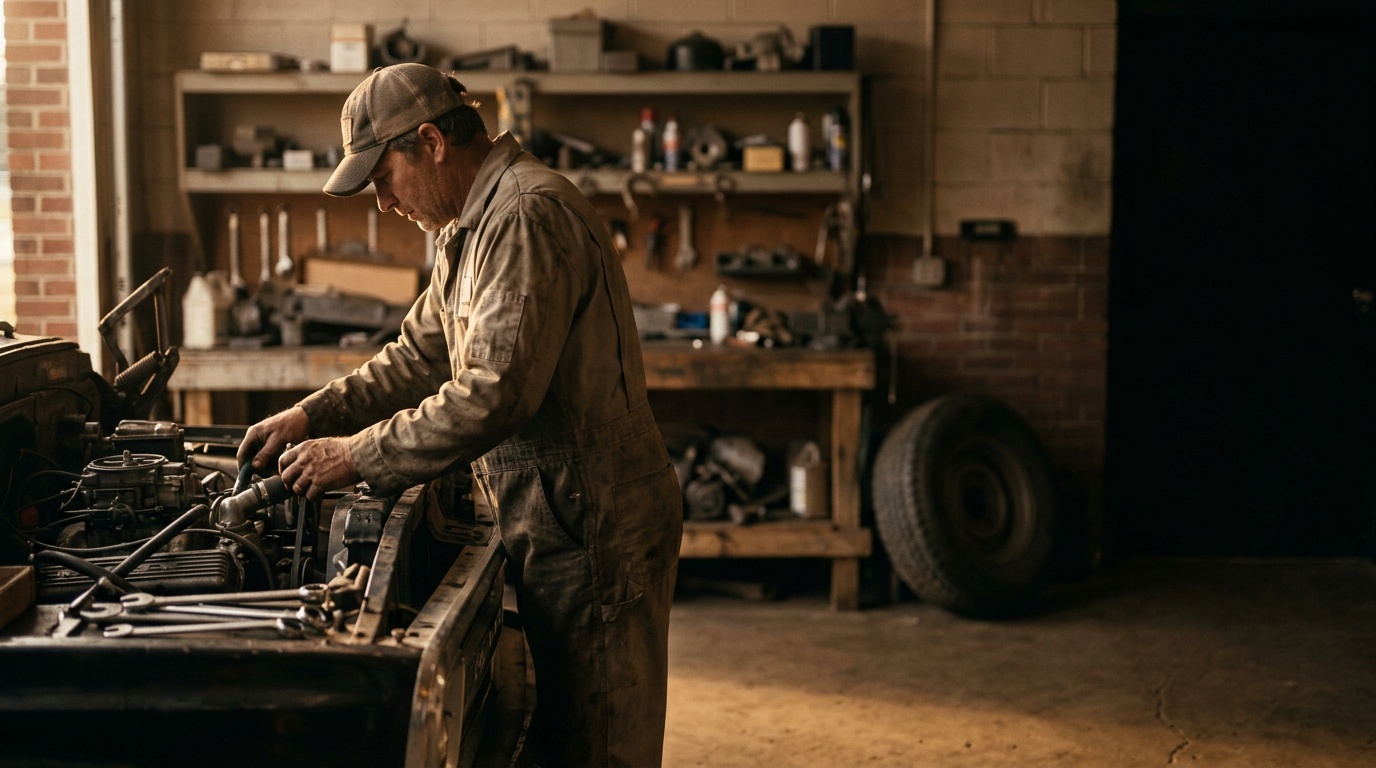
2. Proof comes immediately, and it has to be real. This is where most local sites die. Stock photos of smiling models tell a Somerset visitor exactly one thing: this business is hiding what it actually looks like. Real photography of your actual crew, storefront, and finished work is the single highest-leverage upgrade a local site can get. A short intro video of the owner talking for thirty seconds does even more — people here strongly prefer to hire people, not logos.
3. Services, in plain language, in a short list. Three to six items, each one sentence. Write the way your customers talk. Nobody in Pulaski County searches "residential exterior solutions" — they search "siding repair Somerset KY."
4. Reviews, pulled from Google, with names. Two or three is enough. In a town this size, there's a real chance your visitor knows one of the people quoted, and that's worth more than any paragraph you could write about yourself.
5. The local anchor. A line or two that plants you here: how long you've served Somerset, the areas you cover — Science Hill, Nancy, Burnside, the lake communities. This reassures the customer and tells Google exactly where you belong, which is what gets you found in local search to begin with.
6. Contact, with zero friction. Phone number again, a three-field form at most (name, phone, what do you need), and your hours. Every extra form field costs you real inquiries.
That's the whole site. Done well, it fits in four or five scrolls of a phone screen.
The Mistakes That Quietly Kill Local Sites
We audit a lot of existing sites for businesses around Somerset, and the same problems show up on repeat:
- Stock photography everywhere. Covered above, but it's the number one offender and it's fatal.
- No location words on the page. If "Somerset" appears nowhere in your text, Google has little reason to show you when someone nearby searches. Your town belongs in the headline, not just the footer.
- The buried phone number. If a visitor has to hunt for how to call you, some percentage just won't.
- Slow load. Usually giant uncompressed images. Fixable in an afternoon, and it matters more than any design choice.
- Trying to say everything. The page's job is to start a conversation, not close the sale. Answer the three questions, prove you're real, make contact effortless. Details happen on the phone.
One Honest Caveat
A one-page site converts visitors — it doesn't manufacture them. It works alongside the things that drive Somerset customers to it in the first place: an active Google Business Profile, steady social media, and word of mouth. Page and profile pointing at each other, both showing the same real photos of the same real people — that's the system.
We build sites and the content that powers them for businesses across Somerset and Pulaski County, and we'll tell you straight if one page is all you need — it usually is. If your current site is embarrassing you or just isn't ringing the phone, get in touch and we'll take a look, no pitch attached.

Founder & Director of Photography, Envision Media Co. · London, KY
Cody has run camera on 300+ shoots for 50+ businesses across southeastern Kentucky since 2022, from Somerset marinas to Corbin contractors to Lexington retail. He still shoots most jobs himself, which is where the specifics in these posts come from. More about Cody.
Ready to Grow?
Let's Build Something Together
Want results like the ones we write about? Book a free strategy call and let's make it happen.